
“Strangers” and How the Best Seller Landed with a Men’s Book Club
I can get overwhelmed with the options at the public library. The new release shelves are lined with slickly designed covers, snappy titles and back covers with impressive endorsements. And those books ultimately lead to a partially read stack on my bedside table.
These days I tend to find my next read from less obvious places. For example, a book taken on vacation at a bed and breakfast exchange library, or a box of free books in the alleyway… or in this most recent case, my partner’s nightstand. Discovery is more fun this way… it feels more like a discovery of sorts rather than a direct recommendation from say, a NYT list.
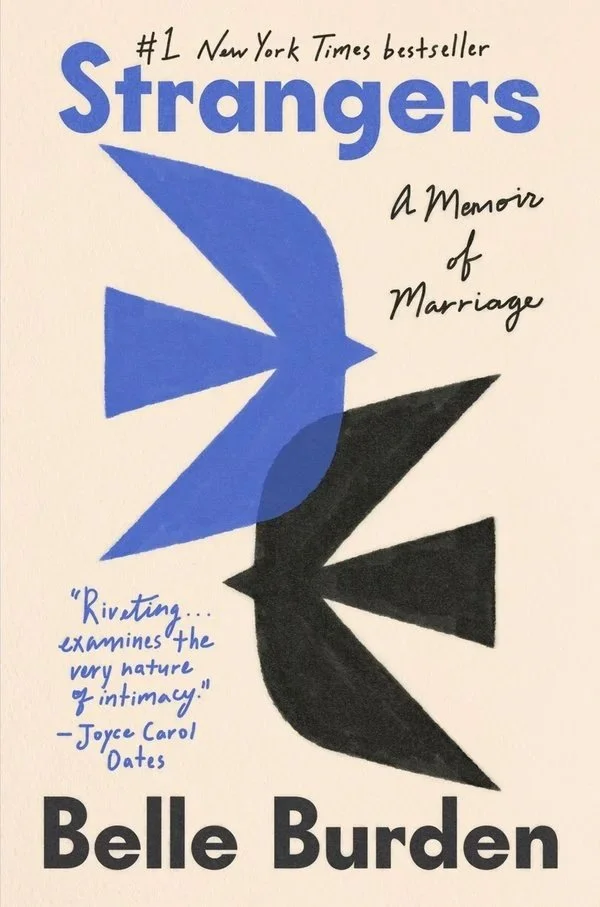
Little did I know at the time, when I picked up “Strangers” (Belle Burdon) that it was the “it” book of the moment. Had I known it was already being developed as a film starring Gwynnie (does she hate that name? Sorry Gwynnie if so, but that’s what I would ask to call you if we were coffee sharing pals), I would have never read it. Good thing that I’m somewhat of a pop culture ostrich, because I’m glad I read it.
If your head has been under a rock too, “Strangers” is a memoir that details Burdon’s experience of her husband unexpectedly and unapologetically leaving their relationship and their family. It is set against the backdrop of ultra-wealth Manhattan whiteness and privilege with summering in “the Vineyard” (Martha’s of course), where being inconspicuously conspicuous about having gob loads of money is the defining cultural de rigueur.
At the same time I was getting close to finishing “Strangers”, I was also assembling a book club. It was the perfect book to introduce, not because I thought, “oh how interesting of a book for a group of men… this will make such a good story to hear what a group of straight identifying dads think of this book” No, it’s because I”m a terribly slow reader and I already had head start on this one.
But what resulted was a surprising and fascinating conversation.
For starters, I enjoyed the read. I think in large part because it was easy. It was a nice break from the psychologically heavy theoretical books that my therapist recommends. I appreciated that Burdon had used writing as a means for grieving. But it also begs the question about whether she needed it to be published to the world in order to have the effect of catharsis.
But the real juice came when bringing the book up with a group of middle aged dads.
“I didn’t like it” said Ryan (names changed). “It is so one-sided, what about his story? Are we just supposed to trust her supposed factual account of the events? What if she’s leaving out”
Another member of the group, who himself, does not identify as being white, felt the world it was set in to be a bit exclusive and alienating.
And that's where it got interesting.
Ryan's critique wasn't dismissive—it was curious. He wasn't saying the book was bad; he was asking: whose story gets told, and who decides we should believe it? He was questioning the narrative we default to accepting.
The other reader's discomfort with the world of the book—the ultra-wealthy Manhattan bubble—made perfect sense. He wasn't in that world. He wasn't invited into that world. So the memoir, which Burdon wrote from inside that world, felt small to him. Exclusive.
And me? I'd enjoyed it. But sitting with their reactions, I realized I'd been moved by her story partly because it was so removed from my own experience. It was intimate voyeurism, almost.
This is the thing about books, and about people: we all bring our own lens. We read the same words and walk away with different takeaways. A man questioning who gets to tell the story. A man feeling excluded by the setting. A man moved by the vulnerability. Three different experiences in the same room.
It's the same in therapy. Clients come in with their own worldviews, their own hurts, their own questions about who gets believed and why. And my job isn't to convince them that my interpretation is right. It's to stay curious about theirs. To understand that perspective isn't universal—it's deeply personal.
The book club was supposed to be about Strangers. Turns out it was about something else entirely: the stories we tell ourselves about other people's stories, and what that says about us.